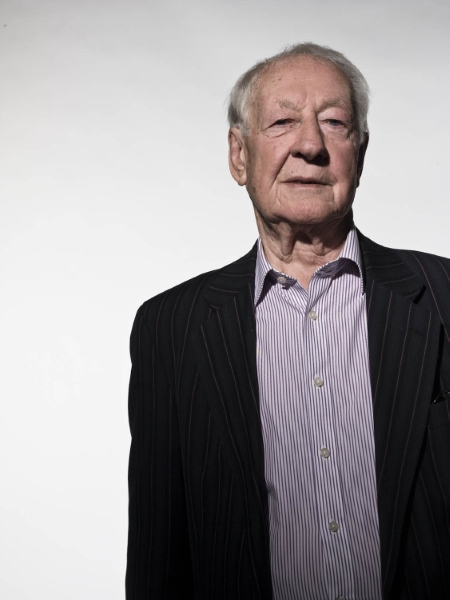
I don't
think my Facebook feed has been quite so busy as it has been in the last couple
of months following the enforced departure of Brian Matthew from Sounds of the Sixties.
I'm a member
of the Sounds of the Sixties Facebook group and the fact that Brian was absent
and replaced by Tim Rice, then the news that he'd wouldn't be returning, had
the avids in uproar. To cap it all the show is to continue with Tony Blackburn
but at the ungodly hour of 6am on Saturday morning, two hours earlier.
As if to rub
salt in the wounds of Brian's devoted listeners, Radio 2 boss Lewis Carnie
wrote in the current edition of the Radio
Times the somewhat illogical statement that "Brian is irreplaceable at 8am on a Saturday, so
we're moving the Sounds of the 60s to
6am, with a live show hosted by Tony Blackburn". So he's both
irreplaceable and replaceable it seems.
Of course network controllers are
perfectly at liberty to have a schedule shake-up and, it must be admitted, that
until this year Radio 2's schedule has been pretty static of late. However,
last month's overnight changes caused a ruckus and now Brian has publically
declared that the decision to leave was by mutual agreement as "absolute
balderdash. I was ready and willing and able to go back". All very messy and sadly not untypical of the
gulf between management and on-air talent - witness the shoddy treatment of
Alex Lester who, after nearly 30 years with the station had no visit from an executive, nor even the offer of a farewell drink.
The furore surrounding SOTS was discussed on yesterday's
edition of Feedback.
Brian has been hosting Sounds
of the Sixties since March 1990. But he wasn't the first presenter; when it
started in 1983 Keith Fordyce was in the hot seat. When Keith left in 1986
there was a string of guest presenters - all musicians and singers who'd
enjoyed fame in the 60s - plus quite a few shows with Simon Dee.
When Brian took over there was a
promise of "new, improved nostalgia" (see article above). The formula
has been pretty much unchanged in the intervening 27 years. Brian's presence
has always lent an air of authority to the show - he was there at the time on Saturday Club, Easy Beat and Thank Your
Lucky Stars. When, today, Brian played a clip from the 60s BBC Transcription
Service series Pop Profile featuring
George Harrison it was Brian interviewing. But
let's not forget that Tony Blackburn has equally valid 1960s credentials - and still
sounds as fresh as he did back then - and there's continuity too with producer
Phil Swern compiling the show.
But today was the end of an era for
Brian, doubly so as it not only marks the end of a 27 year run on Sounds of the Sixties but, including Round Midnight, it's the first time Brian hasn't been on the radio
at least once a week in 39 years.
From my own archive here's an edition
of Sounds of the Sixties from 23
October 2004.
This morning's swansong was a trip down memory lane with
archive clips and mentions of past show features. This is the show in full.
"This is your old mate Brian
Matthew saying that's your lot for this week. See you again soon"
Imagine being able to fashion a radio time-travelling device
that can receive your favourite show from the past or being able to listen
again to an historic broadcast (and no I’m not talking about 4 Extra!)
OK, so it probably wouldn’t be BBC Radio 2 on 18 February
1985. As far as I know nothing earth-shatteringly significant happened that
day. But, for no real apparent reason, thirty years ago I decided to stick some
tapes in my cassette recorder and capture that days output, well a large chunk
of it.
This is your chance to hear again how the station sounded in
the mid-80s, from Night Ride to Round Midnight, stopping off at the JY
show, John Dunn’s Mystery Voice and
all points in between. Here's a quick rundown of the day in jingle form and the full Radio Times schedule.
These are the technical bits: I’m posting the clips on my
YouTube channel just to ensure a wider audience. I’ve chopped out most of the
commercial music tracks in order to avoid any copyright notices. So far this
seems to have worked, though for some reason listeners in Germany may not be
able to hear all the programmes, sorry Germany.
I’ll be posting the shows online during the day of the 18
February 2015 at the same time as their original start time – although to avoid
staying up all night Peter Dickson and Colin Berry’s show will be available on
Tuesday night. Each time a programme is added I’ll update this blog post, send
a Tweet and update my Facebook page. All times in GMT of course.
Unfortunately I didn’t record every show that day. So you
won’t hear the specialist music shows with Alan Dell and Humph, the
mid-afternoon sequence Music All the Way
or that evening’s Star Sound Special.However, elsewhere on this blog you can read
about and hear Alan Dell, Humphrey Lyttelton and Music All the Way. Also the quality of the audio is variable, this is nothing to do with my FM reception at the time but more the fact I used budget tapes.
Kicking things off at 1 a.m. was Peter Dickson with a
suitably jokey start to Nightride.
Peter took care of the overnight shifts alternating with either Bill Rennells
or Charles Nove. Lack of needletime meant we still had doses of the Radio
Orchestra, the Brian Lemon Trio and so on. Making the first of two appearances
that day is John Fogerty, whose new album Centrefield
had just been released, although Peter seems not to know the former lead singer
of Creedence Clearwater Revival. There’s a also a talk from Barney Lawrence –
anyone know who he is? This kind of (mildly) comical talk was still a feature
of Nightride just as they had been on
You and the Night and the Music.
Following Nightride
was a repeat of the previous day’s Two’s
Best with John Dunn, demonstrating that the current overnight repeat policy
is nothing new. Sadly I didn’t record this programme.
At the time the king of the early shows was Colin Berry
who’d had early starts, on and off, since January 1976. Getting up before dawn
every day must have been taking its toll as Colin reports he’s practically
wrecked the studio and nearly garrotted himself with his headphone lead. Note
also a mention of changes that evening on BBC TV, he’s referring to a new BBC1
globe and the launch of EastEnders.
Listen out too for a news summary from David Bellan.
At 6 a.m. enter the still much missed Ray Moore. Ray’s on
form this morning, witness that lovely intro into the Shakin’ Stevens track
There’s also mention of the announcers over on Radio 3 with Tarmac Rigby and Miss
Hughes who’s apparently “gone into tax exile”. Towards the end of this
recording catch Bill Rennells voicing a trail for Gloria’s show later that day
and her special guest David Cassidy – more on that to follow.
It’s “hello chums” from Ken Bruce on the Radio 2 breakfast
show. Perhaps it should have been the Late,
Late Breakfast Show as Ken didn’t go on-air until 8.05 am. At the time of
this recording he’d been presenting the programme for just six weeks. Punctuating
proceedings are Steve Madden reading the news and Pause for Thought with the Rev Roger Royle. Listeners to Radio 2’s
current morning output will notice how much calmer it all was thirty years ago;
no shouting, no whooping, no laughing acolytes and no-one else to read the
traffic news.
The matters on Jimmy Young’s agenda at 10.30 are the
Falklands, the miners, school dinners and Winter Fuel Allowances. In this
extract he interviews SNP MP Gordon Wilson about his Cold Climate Allowance
Bill and Peter Smith of teachers’ union AMMA about school kids supposedly
having ‘chips with everything’. In contrast to Jeremy Vine’s show no listeners
appeared on the programme to voice their opinions, all the feedback from “the
listener” is read out by Jim himself. “Bye for now!”
“Hello there!” It’s amazing to think that Radio 2 took an
hour out each lunchtime for David Jacobs to play “our kind of music”. Much as I
love the music he played it really did seem like the station was stepping back
to the days of the Light Programme, even including a track by Frank
Chacksfield, a regular on the Light.
As a reminder that Radio 2 used to have women presenters during
the day on weekdays here’s Gloria Hunniford with an edited version of her
90-minute show. Promised guest David Cassidy is a no-show, having backed out at
12 noon due to a “contractual difficulty”, so instead its Bonnie Langford!
Glo’s second guest is author John Byrne Cooke, son of Alistair Cooke.
From 3.30 pm it’s as if Radio 2 had a short interlude and
put up the audio equivalent of the test card whilst Music All the Way was on. This was a 30-minute sequence of music on
record and BBC sessions. I didn’t record the programme for 18 February but you
can hear an edition from February 1986 here. Of Music All the Way former Radio 2 presenter and announcer Charles
Nove commented: “An odd
little duty, that one, which involved heading for one of Broadcasting House's
least popular studios (bit of lashup, no windows, dodgy ventilation etc) and
doing the live top and tail for this, and playing in the music, ‘supervised’ by
the BBC's most panicky producer and a bored engineer. Overmanning? Never!”
In all the recordings so far you’ll have heard very little new music, and certainly nothing that would trouble the charts. That’s why David Hamilton’s show was such a breath of fresh air, and rightly dubbed “the music show”. There’s also plenty of listener interaction and prizes available in The Music Game and Spot the Intro.
The
reigning monarch of drivetime for an eon was John Dunn. The show’s mix of
music, topical interviews and a quiz – in this case the long-running Mystery Voice competition – is still the
template for today’s Radio 2 offering. Providing the programme rundown at the
end of this recording is John Marsh.
There
are no recordings of Alan Dell’s double bill of the Dance Band Days and the Big
Band Era but you can hear other editions here. Nor did I tape Humphrey
Lyttelton with The Best of Jazz but
there’s plenty of Humph here. And again I inexplicably failed to record Star Sound Special in which John Benson
featured the music of Nelson Riddle. But what you can hear again is the third
edition of a new panel game, and the second dose that day of David Hamilton, in
Some of These Days. The premise of
the programme was to answer questions about news, events, TV shows and music
that happened on that day in history. On the panel are Peter Jones, Sheila
Tracy, Fiona Fullerton and Barry Cryer.
Closing
proceedings for the day is Brian Matthew with the daily arts and music show Round Midnight, at this point more than
halfway through its 12 year run.Brian’s
guests are Patrick Marr and James Roose-Evans talking about the revival of
George Axelrod’s play The Seven Year Itch
and author Nickolai Tolstoy plugging his latest book The Quest for Merlin.
Few of today’s radio broadcasters can boast a career that extends for over half a century. In that exclusive club is Brian Matthew, the subject of this post to coincide with The Brian Matthew Story on Radio 2 next week.
Brian’s early broadcasting experience was with the British Forces Network in Hamburg in 1948-49 under the leadership of Raymond Baxter. Already showing a thespian streak Brian took part in some of the radio dramas that the unit produced, most notable of these was Trevor Hill’s adaptation of The Adventures of Robin Hood. It was, in retrospect, a starry cast: Brian played King Richard, Nigel Davenport took the lead, Cliff Michelmore was Little John, Baxter was Guy de Guisborne, Geraint Evans was the minstrel Blondel, Tom Singleton the Sheriff of Nottingham, Keith Fordyce played Will Scarlett. Bringing up the rear as the Foresters were Roger Moore and Bryan Forbes. The presence of Keith Fordyce is interesting as over the years their careers would cross many times.
Back in civvy street Brian pursued his acting by training with RADA and then going into rep at The Old Vic (where he me this wife Pamela). Before long he was again trying his hand at radio with a job as presenter with Radio Netherlands Worldwide in Hilversum. In this clip you’ll hear Brian reporting on the effects of the winter floods of 1953.
Returning to the UK still harbouring ambitions to be at the BBC he had to earn money as a milkman in Coventry before getting an audition as a staff announcer. Brian joined the Beeb in July 1955, as announcer and newsreader alongside the likes of Jimmy Kingsbury and Robin Boyle who had also been at BFN Hamburg. Chances are you’ll still catch some of Brian’s announcements on the old comedy shows repeated on BBC Radio 4 Extra, here he’s introducing Hancock’s Half-Hour (1955) and Take It From Here (1957).
The Saturday Club Years
Radio Times 9 August 1958
Brian had an interest in big band music and one of his duties was to compere a series featuring Johnny Dankworth and produced by Jimmy Grant. It was Jimmy who had the idea for a new music programme that would recognise the British skiffle revival of the time and Brian was to be the presenter – the show was Saturday Skiffle Club. Airing on the Light Programme from 1 June 1957 for just 30 minutes a week it proved a hit with listeners. It’s paltry budget of just £51 a show restricted the numbers and sizes of the groups that could perform and famously Lonnie Donegan’s fee of 40 guineas blew the budget and gained a rap over the knuckles for the show’s production team.
When the interest in skifflewaned the programme transformed itself into Saturday Club from 4 October 1958 and now ran for two hours, in what would become its regular slot for the next decade, 10 am to midday. Musically it mixed skiffle, folk, jazz (Britain was now enjoying a trad-jazz boom) and rock ‘n’ roll.
Radio Times 21 February 1959
The importance of Saturday Club cannot be over-stressed. It introduced listeners to all the big stars on the music scene at a time when there were few outlets for popular music. It came to define the BBC’s attitude to rock and pop in the heady days of the early 60s, until the arrival of Radio 1 in ’67. The sessions, those that survive, provide an invaluable archive of the development of British music as well as capturing some of the greats from America. It secured Brian a place in broadcasting history.
Needletime restrictions meant that the two-hour show comprised of one-and-half hours of BBC recorded sessions and thirty minutes of records. Those appearing on the programme included Helen Shapiro, Cliff Richard, The Hollies, Kenny Ball, Dusty, Cilla, The Moody Blues, Manfred Mann, Georgie Fame and, from the States, Gene Vincent, Eddie Cochrane, The Everly Brothers and Roy Orbison. As a showcase for new artists Saturday Club was also vital in breaking The Beatles, so much so that although they only made ten appearances on the show Brian is inextricably linked with the loveable Scouse mop tops.
The early 60s was a busy time for Brian. In 1961he became the presenter of ITV’s Saturday night answer to Juke Box Jury: Thank Your Lucky Stars. The show had started in the spring with Pete Murray compering, he was replaced by Keith Fordyce and then for a while Keith and Brian co-presented, but from November 1961 to June 1965 Brian was the face of ITV pop at the height of the Merseybeat boom.
TV Times 23 December 1961
Thank Your Lucky Stars had a number of guest DJs slots over its run, now familiar names such as Jimmy Savile, Alan Freeman, Jimmy Young, Sam Costa, Don Moss and Kent Walton all appeared regularly. Aping its BBC opposition the show had a Spin-a-Disc slot with a teenage pop jury and made a star out of a 16-year old Janice Nicholls who would score the latest favoured pop release with “Oi’ll give it foive” – it became a national catchphrase.
It was thought that only three editions of Thank Your Lucky Stars survived, but a 1962 programme turned up recently in the treasure trove of recordings saved by the late Bob Monkhouse. Let’s hope that one day some of Bob’s old tapes and films get an airing on television.
Brian was also a well-known voice internationally thanks to the BBC Transcription Service that sent its discs to radio stations around the globe. From 1964 Brian was the main presenter of the radio version of Top of the Pops which re-used BBC sessions from other domestic programmes, such as Saturday Club, interspersed with Brian’s recorded announcements.Top of the Pops ran until the 1990s [1] although Brian ceased to be involved from the 1980s. The discs, which stations should, in theory, have returned to the BBC for destruction, but many didn’t, are now very collectable.
Another TS programme was Pop Profile which consisted of specially recorded interviews with pop stars of the day. Here are two examples featuring John Lennon and Steve Marriott.
Like many DJs of the time there was insufficient work on the Light Programme so appearances on Radio Luxembourg’s shows, recorded in their London studios, also helped pay the bills. Brian would host Brian Matthew’s Pop Parade, Speedy Disc Show, World Top Pops and Midnight with Matthew.
During the sixties Brian also found time to cut the odd record such as a duet with Maureen Evans of Goodness Gracious Me – hear it on the Embassy Records tribute site. Also worth looking out for is the short film UK Swings Again that I caught last year on Sky Arts. It features somewhat static studio performances from The Animals, The Swinging Blue Jeans, The Hollies, Lulu and others all introduced by hip and happening DJs Brian Matthew, Alan Freeman and Kent Walton.
Back at the BBC Saturday Club was continuing to pull in the listeners, in 1966 the show reported a domestic audience of 8 million supplemented by those overseas who could listen in on the British Forces Network (later the British Forces Broadcasting Service) and the General Overseas Service of the BBC (later the World Service) that carried the show for 30 minutes. Here’s your “old mate” Brian introducing the fifth anniversary programme on 5 October 1963. This recording is a repeat broadcast as part of Radio 2’s celebration of the Light Programme on 29 July 1995.
At the same time that Saturday Club was on the air Brian presented a new Sunday morning recorded music show, Easy Beat.Starting on 3 April 1960 it had a musical remit similar to its Saturday counterpart, something of a shake-up for Sunday morning listeners who had previously enjoyed or endured Sandy Macpherson at the organ and a sequence of light music in Simple Melody. Brian would present Easy Beat for three years before handing over to, yes you’ve guessed it, Keith Fordyce. During the latter part of its run in 1967 the host was David Symonds.
On 16 July 1964 the Light Programme launched a new late-night pop show, Top Gear, with Brian in the driving seat. Billed as “an express delivery of pop packages and discs” that first show included Producer Bernie Andrews described the show as being “sharper” than Saturday Club, “in other words it didn’t mix skiffle, trad-jazz, early rock – it was pretty hard rock right from the word go.” For programme one The Beatles who obliged with some programme trailers.
Top Gear ran until 24 December 1964. The following week, New Year’s Eve, Brian was seeing in 1965with New Year’s Revels. Bernie Andrew would revive the Top Gear title at Radio 1 in 1967 as a programme for John Peel.
Brian’s last Saturday Club was on 23 September 1967. The following Saturday Radio 1 was launched and perhaps he was seen as too old for the thrusting new network. As he said some years later “The guillotine keeps on coming down but it’s never quite reached my neck.” Saturday Club remained on Radio 1 for another 16 months under the guidance of Keith Skues and finally Tom Edwards.
The In-Between Years
We now enter a period of nearly a decade when Brian would not be associated with any one main programme, a period that often gets overlooked in any biogs. But come the big network changeover he was still on the BBC,now over on Radio 2 in its first week as one of the regular hosts of Roundabout, the drivetime (although such a term was not used back then) show that had been running since 1958. Brian would work on Roundabout, it never had one permanent presenter, until it got the chop in March 1970. At the same he was also taking turns on the daily record review show Album Time, this would run until September 1972.
In 1970 Brian also popped up on the Saturday morning LP Showcase and on Tuesday evenings on Late Night Extra. During 1972 and 1973 Brian was still on Radio 2 as one of the presenters of the weekday early evening magazine show After Seven. The show had a different host each day and included some well-known names like Ray Moore, Michael Aspel, John Timpson, Cliff Morgan, Alan Freeman, David Jacobs and Desmond Lynam.
If ever there was a natural person to narrate the story of The Beatles it was Brian. So in 1972 he was also working over at Radio 1 on the 13-part series that would eventually be sold around the world.
The following year saw the start of Radio 1’s answer to Desert Island Discs: My Top 12. In each show pop stars and those in the pop business would chat to Brian and choose their Top 12 records, presumably twelve just to fit the hour-long format. The show ran intermittently over three years with Brian’s final guest in December 1976 being Joan Armatrading. [2] The idea was revived, initially as My Top 12 and thenMy Top 10, in 1983 with Andy Peebles as the interviewer.
London Calling September 1979
Brian was also an occasional contributor to the Radio 1 documentary strand Insight (1975-76), with programmes on Joe Meek and the Midlands music scene.Meanwhile over on the BBC World Service a couple of years later he would host the “contemporary and progressive rock” show Matthew on Music (1978-1980).
The Round Midnight Years
From January 1977 Brian was working exclusively on Radio 2, where he’s remained ever since. In fact it was full circle and back to the big bands as his first regular assignment was as host of Band Parade, taking over from Teddy Johnson , and handing over the microphone to Colin Berry the following January.In ‘77 Brian was also the regular cover for any holidaying jocks, sitting in for Terry Wogan and Jimmy Young.
Around this time the BBC was making plans for the wavelength changes in November 1978 and looking to extend Radio 2’s broadcasting hours back to their mid-70s position with a view to going 24-hour. In 1977 the day’s broadcasting closed with the 11pm to midnight The Late Show, with staff announcers [3] taking it in turns to host each day. (Over on Radio 1 medium wave and ‘borrowing’VHF was John Peel). That changed from January 1978 when Brian took over as the permanent host of The Late Show. In fact the very first show went out on a Bank Holiday Monday from 11pm to 2am under the title Around Midnight. Here’s a clip of that opening programme. For the next three months it went out as an hour long The Late Show.
First Radio Times billing for Round Midnight
By 3 April 1978 Radio 2 reverted back to 2am closedown and Brian’s now 3 hour show gained the title by which it would become popular and well-respected, Round Midnight.It was an attempt to re-create the mix of music, chat, reviews and interviews that Late Night Extra had brought to the early days of Radios 1 and 2. It developed from a mainly music based show into an arts magazine with a 60:40 music to speech ratio.
Round Midnight wasn’t just studio-bound and outside broadcasts from arts festivals and theatres were common; an annual fixture involved moving the show north for the fortnight of the Edinburgh Festival.Brian always retained an interest in theatre – he had extended his home in Chelsfield, Kent to include a stage and seating for 50 so that he and Pamela could host their own productions.
During most of its run the show had three or four producers working under an editor to pull all the elements together.Here’s how a typical show, in April 1980, was made-up:
Interviews with -
Jeremy Hayes about the Birmingham Rep production of Mother Dear
Recorded interview with Margaret Lockwood by Jeremy Hayes about her role in Mother Dear
Norman Thelwell about his book A Plank Bridge by a Pool
George Chisholm about his Salute to Satchmo at Sadler’s Wells Theatre
Anna Morrell with a review of As You Like by the RSC at Stratford
Peter Ford and Michael Howell interviewed by Phil Edwards about their book The Elephant Man
Tony Barnfield with the weekly tv and radio review
The above constituted just over an hour of airtime. On the music side the BBC still relied on a fair amount of in-house recordings by its own orchestras on shows such as Round Midnight – the Radio Orchestra, the Big Band and the Midland, Northern and Scottish Radio orchestras were all heard on the programme. This reduced the amount of needletime for music played on disc over the 3 hours to about 40 minutes.
This is how Round Midnight sounded on 18 February 1985.
Parky claimed to have “lost on points” every time he interviewed Muhammad Ali. Here’s Brian’s effort in 1980.
Sitting in on Round Midnight when Brian was on holiday were, amongst others, Peter Clayton, Russell Davies and Richard Stilgoe.
Brian Matthew also had the honour to be the last voice on Radio 2 1500m long wave just before it switched over to Radio 4 on the evening of 22 November 1978.
New network controllers are apt to wield their new management brooms and when Frances Line took over from Bryant Marriott in 1990 it was Adrian Love’s afternoon show and Round Midnight that got the axe. “It’s time to do something different in the evenings” she told The Sunday Times.This was something of a shock to Brian who’d been told that his show was “one of the jewels in the radio crown”. Round Midnight closed its doors on 29 March 1990 with an emotional goodbye from its host: “excuse me while I just nip out the back”.
The Sounds of the 60s Years
But that guillotine didn’t quite touch the neck again as just a couple of days later Brian Matthew was back with Sounds of the 60s. This programme had been running on Radio 2 since 1983, initially presented by one Keith Fordyce and then a number of guest presenters including a return to the Beeb for Simon Dee.
Brian’s first Sounds of the 60s aired on Saturday 31 March 1990 initially running for just an hour, a new series Sounds of the 50s with Ronnie Hilton started that same day.Meanwhile the station’s coverage of the arts was picked up in a new series called, somewhat unimaginatively, The Arts Programme with Sheridan Morley being the main presenter.
Radio Times 31 March 1990
Sounds of the 60s was able to mine the rich seam of BBC session archives that Brian had presentedfirst time round 30-odd years previously, along with a mix of classic records and obscure tracks. Seemingly Brian is destined to constantly relive that decade.
You can catch the show every Saturday between 8am and 10am but for all you “avids” out there here’s part of the A side of a show first heard on 14 September 2002.
[1] Other hosts of Top of the Pops included Keith Skues, DLT, Simon Bates and Richard Skinner
[2] My Top 12 guests included (that I have been able to track down) Neil Diamond, Johnny Mathis, Alex Harvey, Johnny Nash , Ray Stevens, The Bee Gees, Manfred Mann, Gerry Marsden, Mickie Most, Noddy Holder, Eartha Kitt and Barry Mason, Bruce Johnston, John Miles, Buffy Saint Marie, Demis Roussos, David Soul and Linda Ronstadt . A few sports stars crept in such as Claire Francis and Joe Bugner.
[3] The Late Show - in the final week of December 1977 the announcers were Don Durbridge, Ruth Cubbin, Tim Gudgin, Sheila Tracy and Len Jackson.
Brian Matthew’s Themes
Saturday Club – Saturday Jump written by Jimmy Grant and performed by Humphrey Lyttelton and his Band. Re-recorded version by Ted Heath and his Music used later.
Top of the Pops – in the 1970s Machine Gun by The Commodores
Round Midnight – opening theme Matthew and Son by Apollo 100, closing theme ‘Round Midnight by Henry Mancini and his Orchestra featuring Doc Severinsen on trumpet
Sounds of the 60s – Foot Tapper by The Shadows
Brian Matthew - A Postscript
Since I wrote this post in 2012 Brian continued to present Sounds of the 60s to a hugely
appreciative audience. However, in November 2016 Brian was unwell and so Sir
Tim Rice stepped in to look after proceedings. Thereafter, matters start to go
awry for the BBC.
In January 2017 the Corporation announced that Brian had
agreed to step down and that it felt like the "right time for him to step
off the weekly treadmill of presenting the show". The shows fans were in uproar, all the more
when it was compounded by an interview in the press with Brian stating that
this was "absolute balderdash" and that he was more than willing to
carry on.
The following month it was announced that Tony Blackburn
would be taking over SOTS and that -
again much to the consternation of regular listeners - it would start two
earlier at 6am. Brian did, however, return for one final time on 27 February. A
series of further specials was announced starting on Easter Sunday.
To make matters worse on 5 April the BBC announced that
Brian had died earlier that day, an announcement that was quickly retracted a
couple of hours later when it transpired that whilst he was ill in hospital, he
was very much alive. Sadly just three days later the news came through that
Brian had passed away. A true radio veteran would be heard no more.
Here's Brian's final Sounds
of the Sixties.
In 2012 Jim Moir celebrated Brian's career in The Brian Matthew Story.
From your old mate Brian Matthew, that's your lot for this
week.
Inspired by Radio 2's 2DAY event on the 22nd of this month - which promises a taste of the full schedule over a 12 hour period - here's 24 hours of Radio 2 from Thursday 3 April 1980 compressed into just 12 minutes*.
In this montage you'll hear: Bill Rennells, Ray Moore, Terry Wogan, Jimmy Young, David Hamilton, Ed Stewart, David Symonds (who gets the date wrong), John Dunn, Wally Whyton, Colin Berry, Alan Dell, David Bellan, Brian Matthew and Sheila Tracy.
* In January 2020: I' added a clip from You and the Night and the Music with Sheila Tracy to this sequence so that it now runs at nearly 15 minutes, admittedly making a nonsense of the blog post title.
As the D-Day of 23 November 1978 approached BBC Radio was running this promotional material for all the networks, though I can only recall it being played out on Radio 4. Again the publicity is voiced by David Symonds.
On the 22nd over on Radio 1 Dave Lee Travis was telling his listeners about the changes. The promo was voiced by the unlikely combination of John Snagge and Kid Jensen.
Later that day the Radio 4 Six O’Clock news outlined the engineering aspect of the work required. Reporter Nicholas Jones spoke to Chief Engineer Duncan McEwan and Head of Radio Aubrey Singer. The newsreader is Susan Denny.
Over on Radio 3 John Holmstrom was closing the network for the day and offering concerned listeners reassurance and how to avoid hearing “the Albanian Archers”.
At midnight 1500 metres long wave switched from Radio 2 to Radio 4. Here’s Brian Matthew before midnight and David Symonds after midnight (I cheated slightly and recorded this on VHF). I assume this is the first play of Sailing By.
Radio 2 had planned to be broadcasting 24 hours a day at this stage but industrial problems prevented this, so the station closed at 2 a.m. and re-opened at 5 a.m. The early morning announcing shift was taken by Presentation Editor Jimmy Kingsbury. The Early Show is presented by Tony Brandon.